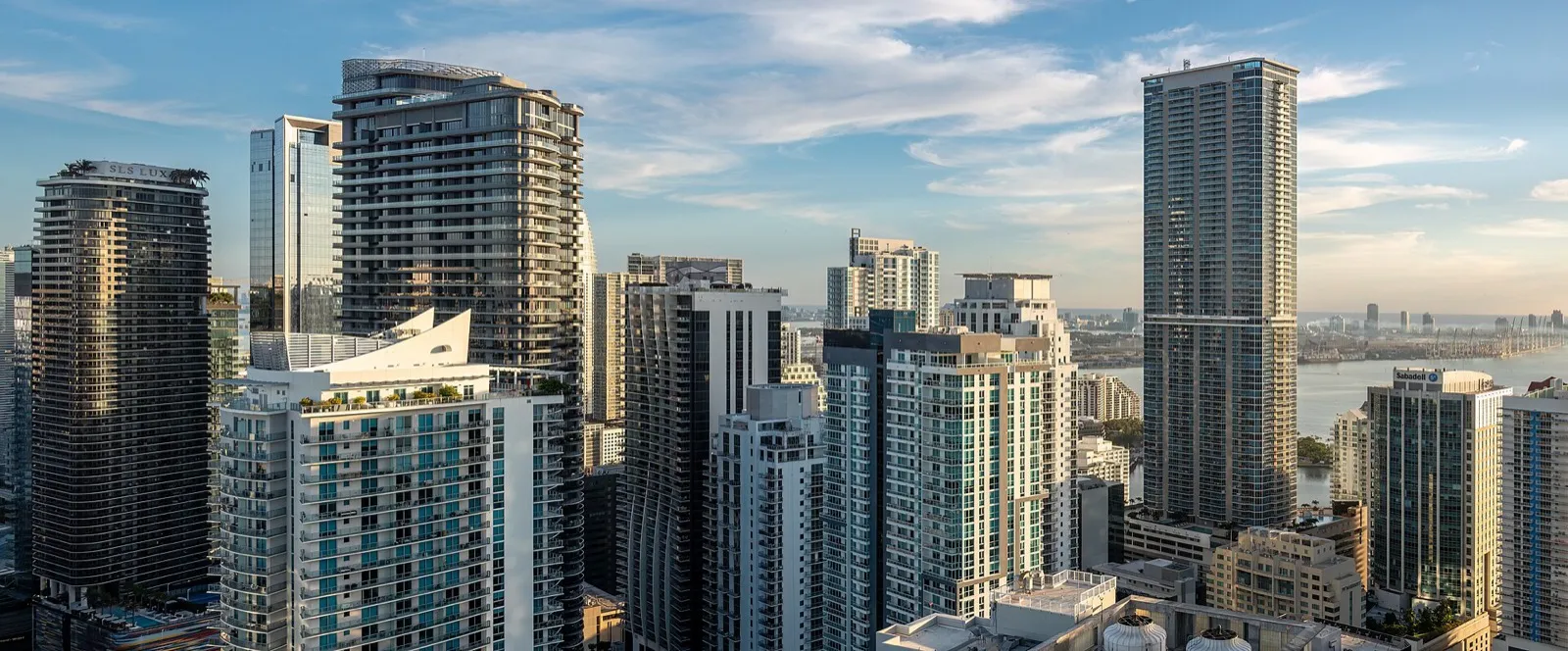
For most international buyers, the choice of condos in Miami, Florida is really a choice about how to own: a lock-and-leave asset you can close the door on for six months, that pays you in amenities and convenience — provided you underwrite the association as carefully as the unit.
Why a condo instead of a house
A condo removes the part of ownership a non-resident cannot supervise from abroad: the roof, the pool, the landscaping, the security. You buy the interior; the association runs the building. That is the lock-and-leave logic that draws families from Bogotá or Buenos Aires — fly in, fly out, and nothing decays in your absence. Brickell offers the urban-core tower with the deepest rental demand; Edgewater is its quieter, newer waterfront neighbor; Sunny Isles is oceanfront and second-home in character. The amenity package — gym, valet, doorman, pool deck — is real value, but it is also the cost base that sets your monthly fee.
Want to see the condos available right now?
View condos →What you actually pay: HOA fees and special assessments
The sticker price is only half the math. A Miami condo carries a monthly HOA fee — broadly US$0.80 to US$1.50+ per square foot per month in newer full-service towers — that covers insurance, staff, amenities and reserves. The number that hurts is not the fee, it is the special assessment: a one-off levy when the building faces a roof, a façade or a garage it did not fund in advance. A low fee with no reserves is not a bargain; it is a deferred bill. Compare the all-in monthly carry, not the asking price.
Florida's post-Surfside reserve law (SB-4D)
After the 2021 Surfside collapse, Florida rewrote the rules for buildings three stories and taller. Condos must now complete a milestone structural inspection at 30 years (25 within three miles of the coast), commission a Structural Integrity Reserve Study, and — critically — fully fund reserves for major components, with the old practice of waiving or underfunding reserves now prohibited. For a buyer this is protective: it forces transparency. But it has also triggered fee increases and catch-up assessments across older stock, which is exactly why the building's compliance status belongs in your due diligence, not in a surprise after closing.
How to read an association before you buy
Ask for, and actually read, the last two years of association financials, the reserve study, the meeting minutes and the milestone-inspection status. You are looking for funded reserves, no pending or rumored special assessment, a healthy delinquency rate, and litigation you can live with. A well-run association in an older building can be safer than a thin one in a shiny new tower. As a non-resident you can still finance the purchase with a foreign national loan, but the lender will scrutinize the association too — another reason to vet it early.